
GU10 Lamp Cap Gauge For Checking The Maximum Insertion / Withdrawal Torques
GU10 Lamp Cap Gauge For Checking The Maximum Insertion / Withdrawal Torques
- Model:
GU10 Lamp Cap Gauge For Checking The Maximum Insertion / Withdrawal Torques

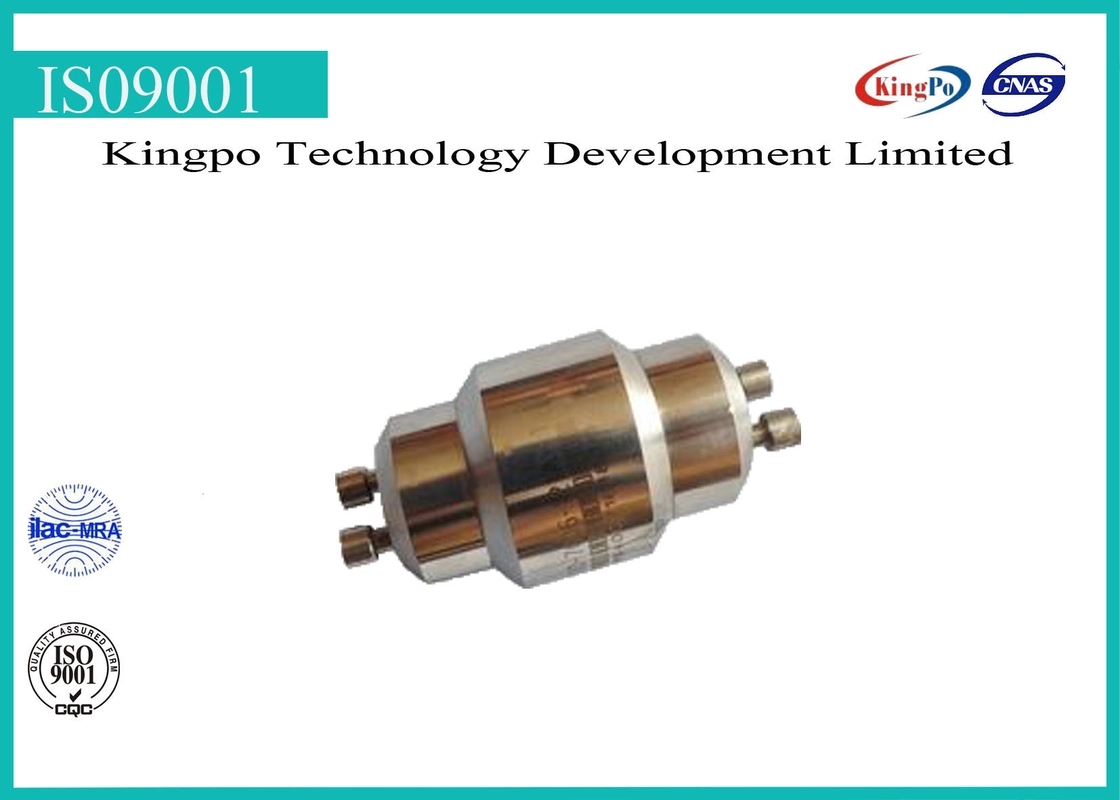
The GU10 Lamp Cap Gauge For Checking The Maximum Insertion / Withdrawal Torques is an insertion and withdrawal torque gauge built to IEC 60061-3. The GU10 cap is a twist-lock bi-pin with 10 mm pin centres — twist-lock caps for mains-voltage reflector lamps. Kingpo machines this gauge in-house from hardened tool steel, inspects it against the sheet before despatch and ships it with a calibration certificate, so it can go straight into an incoming-inspection or production-gauging routine.
The dimension that matters on a GU10 cap is 10 mm pin centres. It is what decides whether the lamp seats correctly and stays safe in the holder, and it is the geometry this gauge is built around.
| Standard | IEC 60061-3 (lamp caps, lampholders and gauges) |
| Sheet | see product title |
| Cap type | GU10 — twist-lock bi-pin, 10 mm pin centres |
| Gauge class | An insertion and withdrawal torque gauge |
| Material | Hardened tool steel (stainless steel on request) |
| Calibration | Supplied with a calibration certificate; re-calibration available |
| Made by | Kingpo — machined, inspected and calibrated in-house |
The verdict is the torque needed to insert and withdraw the lamp must stay inside the specified band. Read the gauge, do not force it: a limit gauge that is forced into place tells you nothing about the part and damages the gauge.
A single limit gauge proves only one side of a tolerance. A GO gauge shows the part is not too small; a NOT GO gauge shows it is not too large. Running both is the only way to demonstrate a cap or a lampholder sits inside the band, and it is what an auditor will expect to see recorded. If you are building a gauge set from scratch, order the two together and keep them in the same case.
This gauge is not a GO / NOT GO pair on its own — it reads a specific feature. Pair it with the GO and NOT GO gauges of the same series when you need full dimensional coverage.
IEC 60061-3 assigns one sheet number per gauge, and the number is what you should order against. Three things decide it: the cap family, whether you are checking a finished lamp or a lampholder, and which feature is being checked — thread, contact-making, protection against accidental contact, insertion torque or a named dimension. Sending us the sheet number avoids the most common error in this category, which is ordering a cap gauge when the test is on the holder, or the other way round.
Yes. Every Kingpo gauge is inspected against the sheet before despatch and shipped with a calibration certificate. We can also re-calibrate gauges you already hold.
It covers GU10 caps — 10 mm pin centres. If your lamp uses a different cap family, the sheet number will be different; send us the cap marking and we will identify the sheet you need.
Yes. We machine to customer drawings as well as to IEC 60061-3 sheets, including modified gauges for production gauging where a full standard gauge is impractical.
The gauging surfaces and any thread. Limit gauges are inspection tools, not production tools: keep them off the production line, store them dry, and re-calibrate on a cycle set by usage rather than by calendar.
Other GU10 gauges in the same cap family:
Send the standard, figure number and quantity to Kingpo technical sales for a quotation and delivery date.
Specification of the GU10 Lamp Cap Gauge For Checking The Maximum Insertion / Withdrawal Torques. The values below follow the IEC 60061-3 gauge sheet; where a dimension is called out on the sheet, the sheet governs and we machine to it.
| Standard | IEC 60061-3 — lamp caps, lampholders and gauges |
| Sheet | as stated in the product title |
| Cap type | GU10 — twist-lock bi-pin, 10 mm pin centres |
| Gauge class | Insertion / withdrawal torque gauge |
| Material | Hardened tool steel; stainless steel on request |
| Dimensional tolerance | As specified on the IEC 60061-3 gauge sheet |
| Scope of supply | Gauge and calibration certificate |
| Calibration | Calibration certificate supplied; re-calibration available |
| Origin | Kingpo — machined, inspected and calibrated in-house |
Custom versions, alternative materials and re-calibration are available. Send the standard, figure number and quantity for a quotation. Gauges are inspection tools: re-calibrate on a cycle set by usage, not by calendar time.